

We have been around since the early 1980s, and our maxim then – and still today – is independence from Austrian party politics; Student representatives at the university should determine the direction, not party headquarters. The first candidacy took place at TU Wien, and at many universities groups with the same basic idea became established, and these joined together to form the Student Association Lists of Austria (FLÖ).
Origins
In the 1970s, HTU Wien was dominated by the Österreichische Studenten Union (ÖSU), which later developed nationwide at many universities into the Aktionsgemeinschaft (AG) (with the exception of Uni Linz and TU Graz, where it broke away from the party). The ÖSU at that time, like the AG today, was close to the ÖVP and also financially dependent on it. As is to be expected when party-dependent factions hold the executive, working for independent faculty and study program representations (then called Fachschaften) was very difficult. Out of this unsatisfactory situation, the idea for an independent list as a counter-movement to the ÖSU was born: the party-independent FACHSCHAFTSLISTE was founded.
In 1981, a „Liste unabhängiger Fachschaften an der Technik” ran for the first time in the student union election at TU Wien. Already in its first run, the absolute majority of the ÖSU at TU Wien was broken, and two years later the ÖSU at TU Wien had died out. After the elections in 1983, the Fachschaften provided the chair of the main committee (today the chair of the university representation) at HTU Wien for the first time.
Independent, instead of subservient to the government
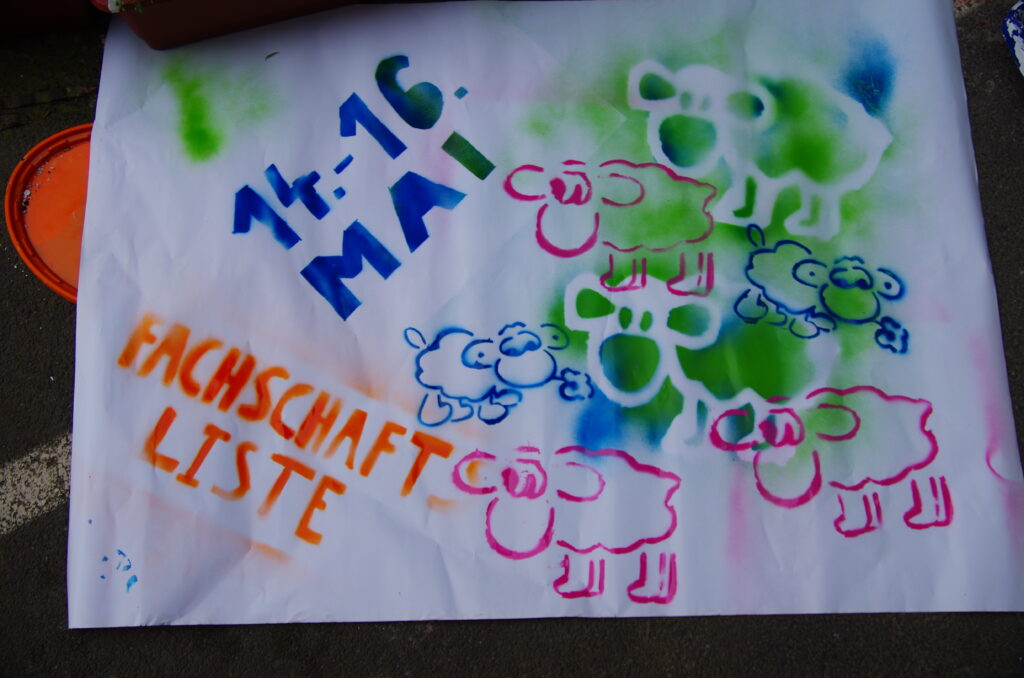
How important this independence is in practice became evident just four years later, in 1987: When drastic deteriorations in study conditions and cuts to social benefits threatened, around 40,000 students took to the streets in Vienna. However, the ÖVP-affiliated Aktionsgemeinschaft (AG), which at that time dominated both the central committee (today's federal representation) and almost all other university representations, sided with the SPÖ-ÖVP government and distanced itself from the protests.
Since HTU Wien was the only large university representation at the time that was politically independent, it became the center of the nationwide protest movement. Demonstrations were coordinated, flyers were printed, and delegations to the ministries were organized, which reported directly back to the student plenum. Without this logistical and independent infrastructure, the largest student protest wave of the Second Republic would have been hardly conceivable.
Independent lists for all of Austria
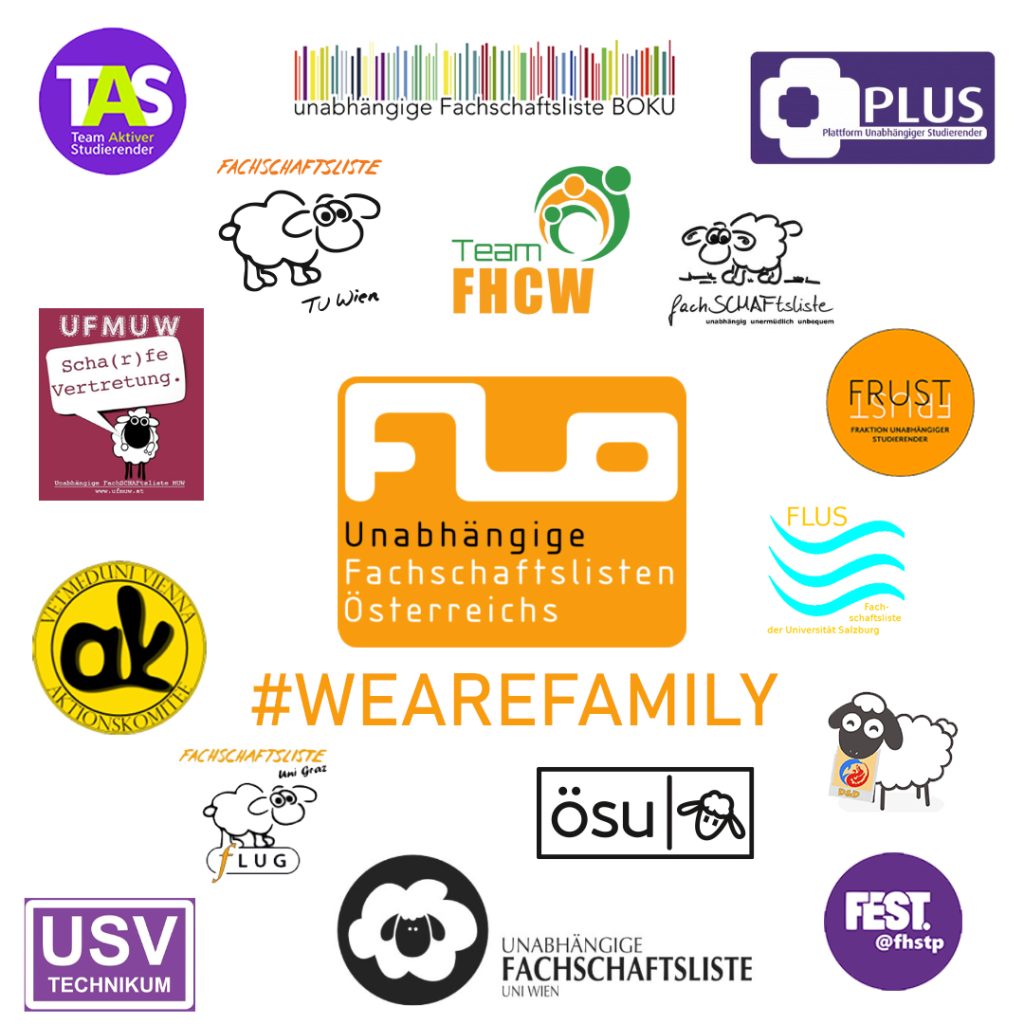
But the idea of the Student Association Lists was not limited to HTU Wien. Immediately after the first beginnings in Vienna, a Student Association List was founded in 1983 at TU Graz, which has continuously provided the chairpersons since then. Over time, there were Student Association Lists at 13 universities: University of Music and Performing Arts Graz (Delphin & Drache), University of Art and Design Linz (Kunst und Politik), Mozarteum Salzburg (Kunst, Soziales und Politik), University of Vienna (FLUW), University of Klagenfurt (PLUS), University of Linz (Unabhängige ÖSU Linz), University of Graz (FLUG), Montanuniversität Leoben (horizon), TU Graz (Fachschaftsliste), University of Veterinary Medicine (ak), University of Natural Resources and Life Sciences (FALI BOKU), TU Wien (Fachschaftsliste), Academy of Fine Arts (Liste Clementine), Independent Student Association List Uni Salzburg (FLUS) and the Independent Student Association List MUW (UFMUW).
Thus, from a small group of committed Fachschaftsmitarbeiterinnen und -mitarbeitern, the largest independent student faction in Austria has emerged. After the ÖH election in 2007, we provided the chair of the ÖH federal representation for the first time with Hartwig Brandl.
The Fachschaftslisten today
We still cherish and maintain the independence of the FACHSCHAFTSLISTEN today. It makes us and the work we do credible. We are not party junior officials preparing for future party careers through pseudo-engagement in university politics. „From students for students” is our credo.
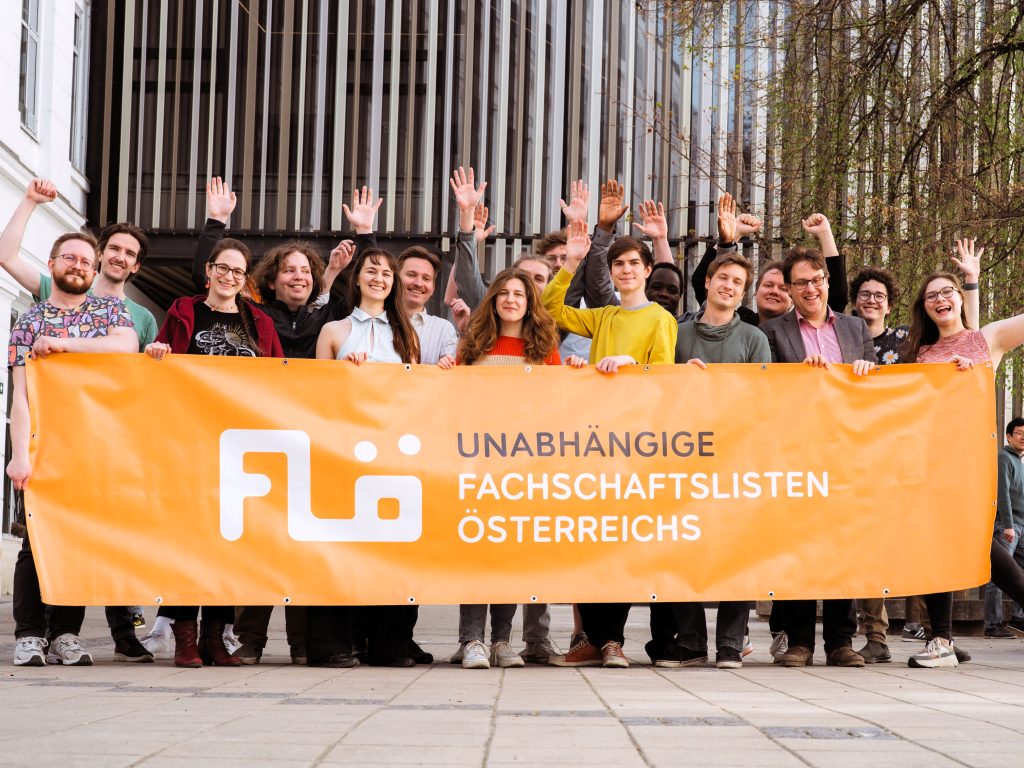
The Student Association principle is the secret of our success. It enables student representatives to contribute to the work of the university representation. This ensures that the chairpersons of the university representations do not lose touch with the everyday problems of students in their activities.
University representations led by the Student Association Lists grant the study and faculty representations a maximum degree of autonomy in order to facilitate their ability to work. Our motto „Together instead of against each other” is reflected not only in our dealings with students, but also in the dealings of the student unions with the study and faculty representations.